Microplastics in everyday life – what do we actually know?

Updated on
Mikroplast i hverdagen – hva vet vi egentlig?

Microplastics have received growing attention in recent years. Tiny plastic particles have been found in nature, in air and water, and in various foods. At the same time, researchers are still working to understand how much people are exposed to, and what that exposure might mean for health.

So what exactly are microplastics, where do they come from – and what do we know so far?

What are microplastics?

Microplastics are very small plastic particles. They can form when larger plastic products wear down or break apart over time, but they can also come from a range of everyday products and activities.
AI-generated

Sources include car tyres, synthetic textiles and various plastic products.

Because the particles are so small and widespread in the environment, they can also make their way into the food chain.

Microplastics are found all around us

Research has detected microplastics in marine environments, freshwater, soil, air, food and drinking water.

That means people can be exposed to small plastic particles through several different sources.

But being able to detect microplastics is not the same as understanding what that exposure means for health.

Researchers are still studying how much micro- and nanoplastic people take in, how the particles behave in the body, and what health effects, if any, different levels of exposure might have.

Can plastic packaging release microplastics?

Research shows that some plastic products and containers can release micro- and nanoplastics during use.

How much is released can depend on the type of plastic and how the product is used. Temperature, wear and length of use are among the factors researchers are investigating.

This doesn't mean all plastic packaging or containers release the same amount, or that normal use of plastic containers has been shown to be harmful to health.

Research in this area is still evolving, and there remain significant knowledge gaps – both in how much we're exposed to, and what that might mean for human health.

Are microplastics harmful to humans?

The short answer is that we don't yet know enough to give a simple one.

Researchers have found micro- and nanoplastics in the environment and in various foods, and laboratory studies are looking at how such particles might affect living organisms and cells.

But it's difficult to translate those findings directly into what normal exposure means for humans.

That's why researchers and authorities are continuing to map exposure levels and possible health effects.

Plastic also serves important purposes

Wanting to reduce unnecessary plastic use doesn't mean all plastic is bad. Plastic is light, durable, and has properties that make it essential in everything from medical equipment to transport, food packaging and countless everyday products.
Glass bottle is a good alternative to plastic bottle

A more plastic-free everyday life isn't about eliminating plastic altogether. It's more about spotting where single-use items can be replaced with something reusable, and where other materials work just as well.

Small steps towards less unnecessary plastic

There are several places in the kitchen where it's easy to choose reusable alternatives.
Choose products that can be reused again and again
Norgesglasset oppbevaringsglass med trelokk samlebilde miljø

For example, you can:

  • store dry goods in glass
  • use a reusable bottle for water and other drinks
  • store leftovers and prepped ingredients in containers you can use again and again
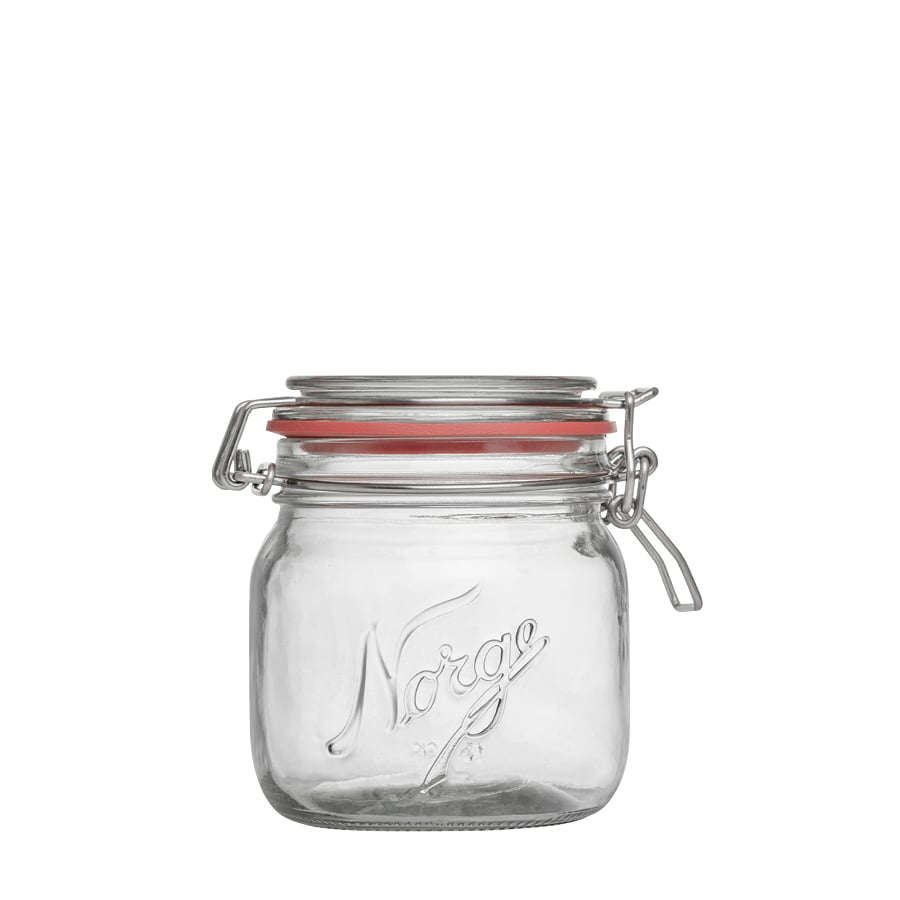
  • use Norgesglass jars for homemade food, breakfast and food prep
  • keep using what you already have for as long as it works

The point isn't to get everything right. It's about making conscious choices where they're easy and natural.

Plastic-free living, one step at a time

Plastic will remain part of our everyday lives. At the same time, we can reduce the need for certain single-use items and choose solutions we can reuse when it makes sense. For Norgesglasset, this is really an old idea in a modern form. These jars have been filled, emptied, washed and reused for generations. You don't need to change everything. Sometimes it's enough to use what you already have a little longer – and fill the jar again.

Sources and further reading: